

Exploring Ameela® - Polynucleotides versus Hyaluronic Acid for Eye Rejuvenation
Polynucleotides, also known as PNs, have gained attention recently in the field of aesthetics and dermatology, due to their potential benefits for the skin, and the differences in formula and function to hyaluronic acid (HA) fillers.
In this blog, we look at the differences between Ameela® polynucleotides and hyaluronic acid (HA) fillers such as Light Eyes Mesotherapy, in the periocular area.
WHAT IS AMEELA®?
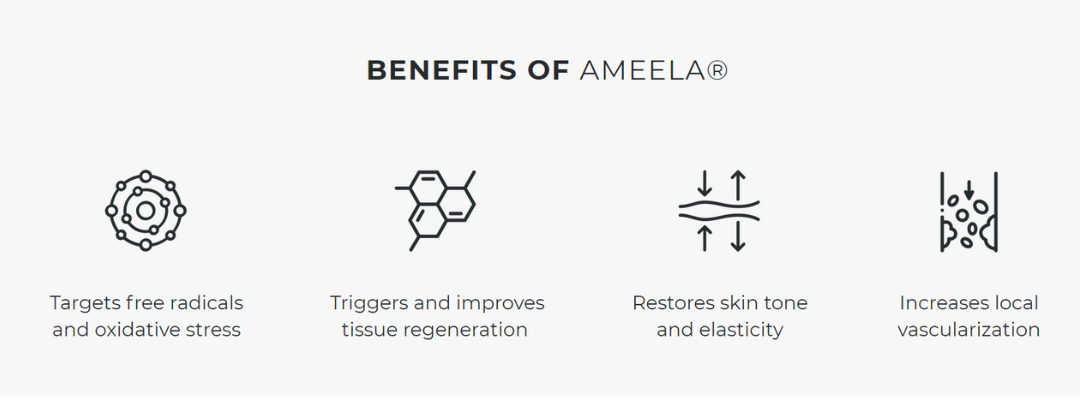
Ameela® (previously named Nucleadyn) is an injectable biorevitalization treatment that utilizes polynucleotides to provide deep hydration, stimulate collagen production, firm and contour the skin, reducing the appearence of fine lines and wrinkles.
An injection of Ameela® changes the cell structures in the skin from fibroblasts to myofibroblasts, a variation of fibroblasts that lift the skin structure in just a few minutes.
WHAT ARE THE BENEFITS OF POLYNUCLEOTIDES ON THE PERIOCULAR AREA?
SKIN REJUVENATION
Polynucleotides have been found to stimulate the production of collagen and elastin, which are crucial proteins for maintaining skin elasticity and firmness. By promoting collagen synthesis, PNs may help reduce the appearance of fine lines, wrinkles, and crow’s feet around the periocular area.
IMPROVED SKIN TEXTURE AND TONE
PNs have been reported to enhance the overall texture and tone of the skin. They can help improve skin roughness and promote a smoother and more even complexion in the periocular region.
MOISTURISATION AND HYDRATION
Polynucleotides have humectant properties, meaning they can attract and retain moisture in the skin. By providing hydration to the periocular area, PNs may help alleviate dryness, reduce puffiness, and improve the appearance of under-eye bags.
REDUCTION OF DARK CIRCLES
Dark circles under the eyes can be caused by various factors, including thinning skin, blood vessel dilation, and increased pigmentation. Polynucleotides may help address some of these factors by improving skin thickness and quality, promoting blood vessel constriction, and inhibiting the production of melanin pigment.
ANTI-INFLAMMATORY EFFECTS
PNs have been shown to possess anti-inflammatory properties, which can be beneficial for reducing inflammation and redness in the periocular area. This can be particularly helpful for individuals with sensitive or irritated skin around the eyes.
HOW DO POLYNUCLEOTIDES (PNS) WORK AND HOW DOES IT DIFFER FROM HYALURONIC ACID (HA)?
While polynucleotides (PNs) and hyaluronic acid (HA) are used in aesthetic treatments, it’s important to note that the effectiveness of each may vary depending on individual preferences, treatment goals, and the specific characteristics of the periocular area. Hyaluronic acid (HA) is the filler used in tear trough treatments. HA is a naturally occurring substance in the body that helps maintain moisture and volume in the skin. HA fillers are chosen for tear trough correction due to their compatibility with the delicate and thin skin around the eyes. Here are some reasons why polynucleotides may be considered beneficial for the periocular area, over hyaluronic acid fillers.
REGENERATIVE PROPERTIES
Polynucleotides have been reported to possess regenerative properties, potentially stimulating cellular activity and promoting tissue repair. They are believed to support the natural healing process and may contribute to skin rejuvenation in the periocular region.
ENHANCED COLLAGEN SYNTHESIS
PNs have shown the ability to enhance collagen synthesis, which is important for maintaining skin elasticity and firmness. By promoting collagen production, PNs may help improve the appearance of fine lines and wrinkles around the eyes.
LONGEVITY
Some studies suggest that polynucleotides may have a longer duration of effect compared to hyaluronic acid fillers. While HA fillers are generally temporary and require repeated treatments, the prolonged effects of PNs may reduce the frequency of touch-up treatments.
POTENTIAL FOR SKIN QUALITY IMPROVEMENT
Polynucleotides have been suggested to enhance the overall quality of the skin, including its texture, hydration, and tone. By improving skin health, PNs may help address concerns such as dryness, uneven skin tone, and roughness around the periocular area.
ADDITIONAL BENEFITS BEYOND VOLUME RESTORATION
While HA fillers primarily focus on restoring volume to specific areas, polynucleotides are thought to offer additional benefits beyond volume enhancement. These include potential effects on skin texture, elasticity, and overall skin rejuvenation.
The super benefits come to play when a treatment combines both Ameela® and hyaluronic acid fillers. The anti-free radical action of Ameela® prolongs the activity of hyaluronic acid, reducing its degradation by around 40%.
It’s important to note that injectable treatments such as this should only be performed by qualified and experienced medical aesthetic professionals who have a thorough understanding of facial anatomy and injection techniques to minimize the risk of complications. Get in touch with us to book a consultation with one of our trained practitioners to determine if Ameela® and/or a combination of hyaluronic acid fillers, such as Light Eyes Ultra, is suitable for your specific concerns and goals.
Read more on Light Eyes Ultra Mesotherapy.
Contact us on 01628 308060, or email hello@springwellclinic.co.uk.